
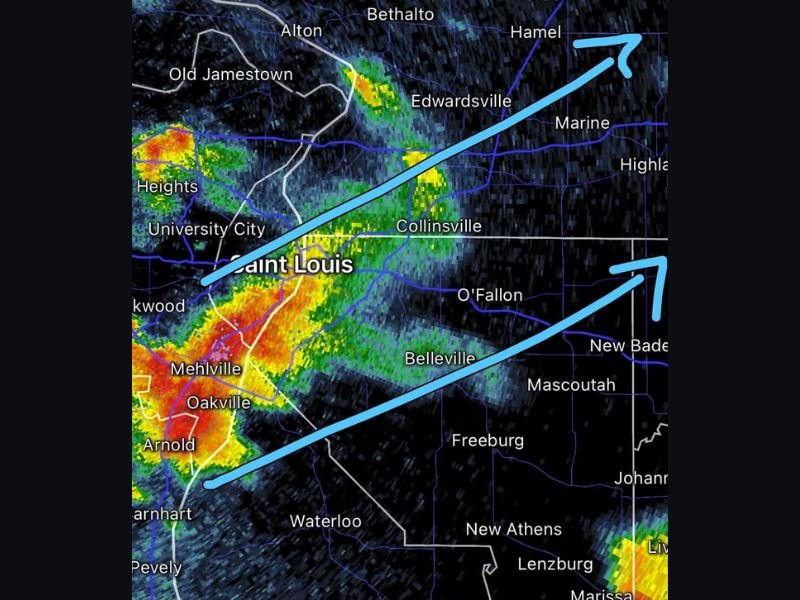
ST. LOUIS, MISSOURI / ILLINOIS — An early morning cell cluster was tracked moving northeast across the St. Louis metropolitan area and surrounding Illinois communities at 4:53 a.m. Monday, with forecasters noting hail is possible with this system over the following hour — though no formal warning had been issued at the time of the update.
Cell Cluster Tracking Northeast Across St. Louis Metro
Radar at 4:53 a.m. showed an active and intensifying cell cluster moving in a clear northeast direction through the heart of the St. Louis area, with the most intense radar returns — shown in deep red and orange on radar imagery — concentrated over south St. Louis, Mehlville, Oakville, and Arnold on the Missouri side of the metro.
The storm system’s northeast tracking direction places a direct path through a densely populated corridor of communities on both sides of the Missouri-Illinois border.
Hail Possible for Belleville, Cahokia, O’Fallon, Collinsville and Highland
Forecasters specifically identified five Illinois communities sitting in the projected path of the cell cluster as the primary areas of hail concern over the following hour — Belleville, Cahokia, O’Fallon, Collinsville, and Highland. These communities fall directly within the northeast storm track shown on radar at the time of the 4:53 a.m. update.
While no formal severe thunderstorm warning had been issued at that point, the presence of active convective cells with enough intensity to prompt a hail mention means residents in these areas needed to be aware of possible hail impact to vehicles and property during the early morning hours.
No Warning Issued But Threat Real for Impacted Zone
Forecasters were transparent that no official warning was attached to this cell cluster at the time — but made clear that hail remains a real possibility with the system as it continues tracking northeast. The lack of a formal warning does not eliminate the risk for communities in the path of the storm cells.
Radar returns visible over Edwardsville, Collinsville, and the broader Metro East Illinois region indicated ongoing storm activity pushing steadily through the area in the predawn hours.
Broader Context — Major Outbreak Still Expected Later Today
This early morning cell activity comes ahead of what forecasters are warning will be a significantly more dangerous severe weather event later Monday afternoon and evening. A major tornado outbreak remains on track for the St. Louis and Springfield Illinois region, with strong to violent long-track tornadoes considered likely during the afternoon and evening hours.
Residents across the entire St. Louis metro and surrounding Illinois communities should use the morning hours to finalize shelter plans and ensure all severe weather alert systems are active and functioning well before the main outbreak threat develops later today. Stay with GordonRamsayClub.com for the latest updates.

Leave a Reply