
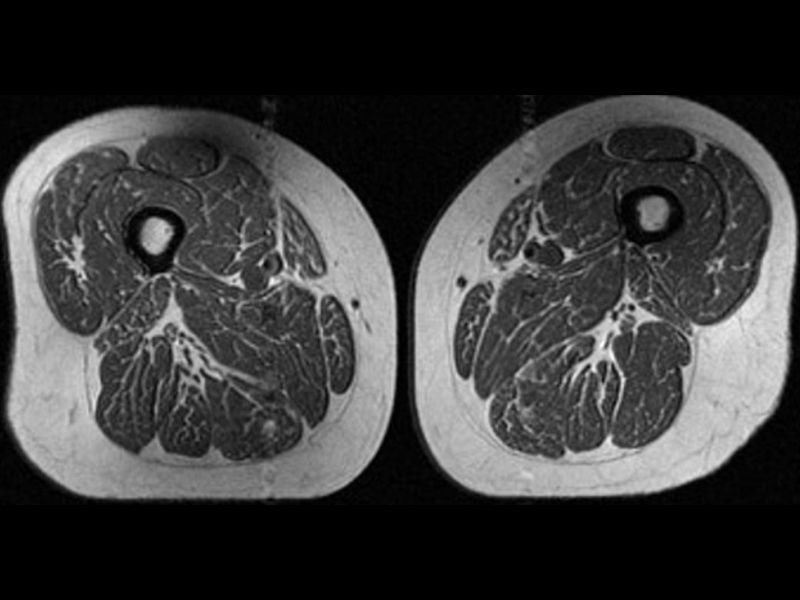
SAN FRANCISCO, CALIFORNIA — A new study published in the journal Radiology has found that people who consume high amounts of ultraprocessed foods are developing dangerous levels of fat marbling inside their thigh muscles, with researchers at the University of California, San Francisco warning that the condition signals serious long-term health consequences well beyond weight gain.
MRI Scans Reveal Alarming Fat Infiltration Inside Muscle Tissue
Researchers analyzed MRI scans from 615 participants in the Osteoarthritis Initiative, none of whom had any signs of knee osteoarthritis at the time of scanning. What they found was striking — individuals consuming the highest levels of ultraprocessed foods showed significant streaks of fat embedded between and within their muscle fibers.
One 62-year-old woman, who obtained 87% of her annual calories from ultraprocessed foods including cold cereals, chocolate candy, and sugary soft drinks, showed thigh muscles so heavily infiltrated with fat that her MRI resembled a slice of heavily marbled steak.
A second participant, a 61-year-old woman whose diet consisted of roughly 29% ultraprocessed foods, showed far less fat marbling despite having a slightly higher BMI, reinforcing the direct connection between diet quality and muscle condition.
Fatty Muscle Infiltration Linked to Knee Damage and Wider Health Risks
Lead researcher Dr. Zehra Akkaya of UCSF noted that the fat infiltration found in thigh muscles is not an isolated issue — it reflects a systemic process affecting muscles throughout the entire body, including the calves, shoulders, and abdomen.
Thigh muscles play a critical role in stabilising the knee joint. When fat replaces healthy muscle fiber, strength and function decline, placing greater mechanical stress on the knee and significantly raising the risk of osteoarthritis — a condition already affecting nearly 375 million people worldwide.
Radiologist Dr. Miriam Bredella of NYU Langone Health, who was not involved in the study, emphasized that reduced muscle quality from fat infiltration carries consequences far beyond joint pain, increasing surgical complications, hospital stay lengths, and risks for cancer patients.
Caloric Intake Alone Does Not Explain the Damage
One of the study’s most significant findings was that total calorie consumption did not determine the level of muscle fat infiltration. According to senior study author Dr. Thomas Link of UCSF, the more ultraprocessed foods a person consumed, the more intramuscular fat they carried — regardless of how many calories they were eating overall.
This finding points directly at the nature of ultraprocessed foods themselves, rather than simple overeating, as the key driver of the muscle damage observed across participants.
Experts Outline Steps to Rebuild Muscle Quality and Protect Joints
Researchers and health experts say the damage is not irreversible. Combining low-impact exercise with a diet built around real, home-cooked foods can meaningfully improve muscle quality over time, though recovery is easier for younger individuals.
Recommended exercises include wall squats, standing leg lifts, calf raises, and elliptical training. For diet, experts advise swapping ultraprocessed items for whole grains, fresh vegetables, legumes, and plain dairy, while eliminating sugar-sweetened beverages entirely.
Stay with GordonRamsayClub.com for the latest updates and detailed coverage.

Leave a Reply