
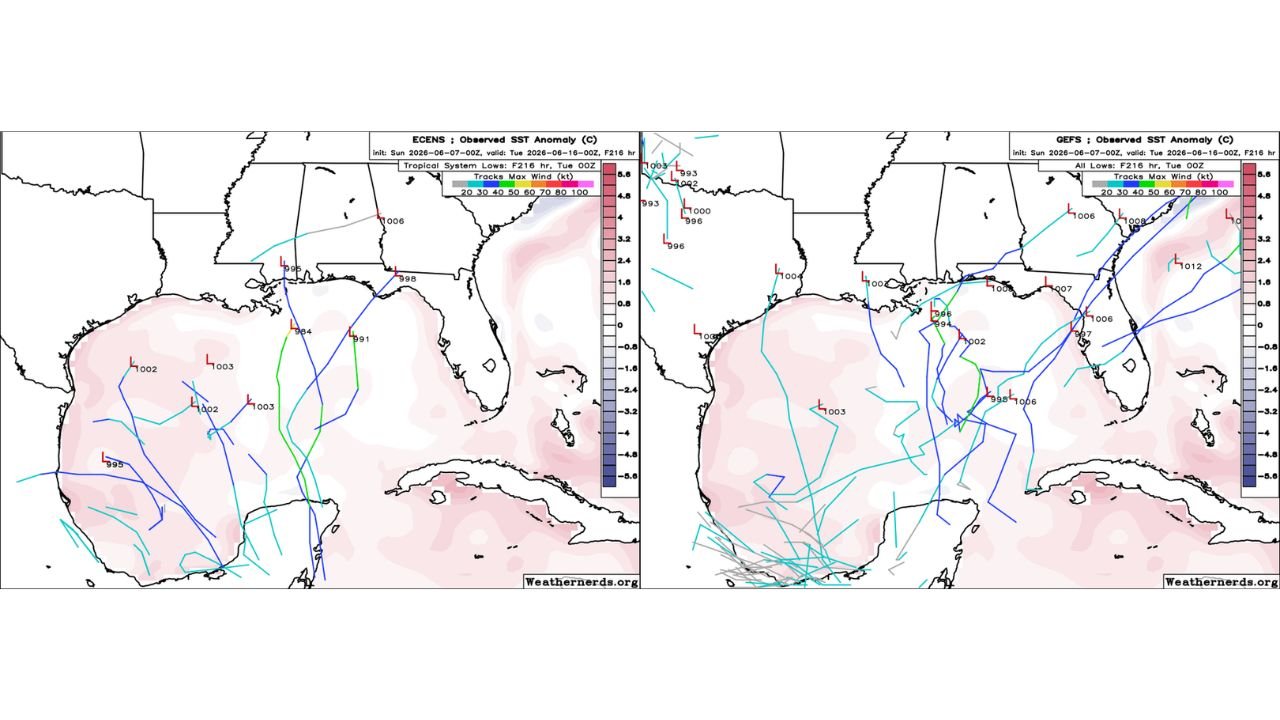
MIAMI, FLORIDA — The already diminishing Gulf of Mexico tropical development signal is fading further this Sunday morning June 7, 2026, as the 00Z European ECENS and GFS ensemble model track data initialized June 7, 2026 both show less enthusiasm about potential Gulf tropical development, with AI ensemble models also continuing to show little interest in any organized tropical cyclone formation across the Gulf basin in the coming days.
00Z Euro and GFS Ensembles Both Less Enthused About Gulf Tropical Development Sunday
The ECENS European ensemble initialized 00Z June 7, 2026 shows tropical system low pressure track solutions in the Gulf of Mexico with central pressures ranging from 984 to 1003 millibars across scattered track members, indicating a disorganized and inconsistent model signal for any coherent tropical development. The GEFS GFS ensemble initialized at the same time shows a similarly scattered and unfocused collection of low pressure track solutions across the Gulf with pressures ranging from 994 to 1007 millibars, with no clear consensus track or development signal emerging from the ensemble suite. Both model systems are described as less enthused about Gulf tropical development compared to earlier runs this week.
AI Ensemble Models Continuing to Show Little Interest in Gulf Tropical Formation
Adding further confidence to the diminishing tropical outlook, AI ensemble models are also continuing to show little interest in organized tropical cyclone formation across the Gulf of Mexico at this time. The agreement across traditional global ensemble models and AI-based forecast systems in downplaying the Gulf tropical development signal strengthens the overall assessment that meaningful tropical storm formation in the Gulf during the mid-June window is becoming increasingly unlikely based on the current state of model guidance.
Scattered Low Pressure Tracks Show Disorganized Signal Across Gulf and Caribbean
The ensemble track maps for both the ECENS and GEFS show a highly scattered collection of low pressure solutions spread across the Gulf of Mexico, western Caribbean, and Central American coastline, with no dominant or well-organized track cluster emerging from either model suite. This lack of track consistency and model agreement is a key indicator that the atmospheric environment does not currently support the development of a coherent tropical system, as the various ensemble members are unable to agree on where or whether any Gulf disturbance would organize and track during the forecast period.
Gulf Coast Residents Can Monitor With Reduced Concern as Development Signal Fades
With the Euro, GFS, and AI ensemble models all moving in the direction of less Gulf tropical development enthusiasm as of Sunday June 7, 2026, Gulf Coast residents across Louisiana, Mississippi, Alabama, and Florida can reduce their near-term tropical weather concern while continuing to monitor official National Hurricane Center outlooks for any changes in the developing pattern over the coming week.
Stay with GordonRamsayClub.com for the latest updates.

Leave a Reply